
 By
By Inside a WWE ring, Jacob Fatu looks like a man who could come unhinged at any moment.
They don’t call him the “Samoan Werewolf” for nothing.
The 300-pound powerhouse can overwhelm an opponent with brute force before soaring through the air with the athleticism of a man half his size. That combination helped Fatu capture the United States Championship from LA Knight at WrestleMania 41 in Las Vegas. (WWE)
Less than a month later, St. Louis became part of Fatu’s championship story.
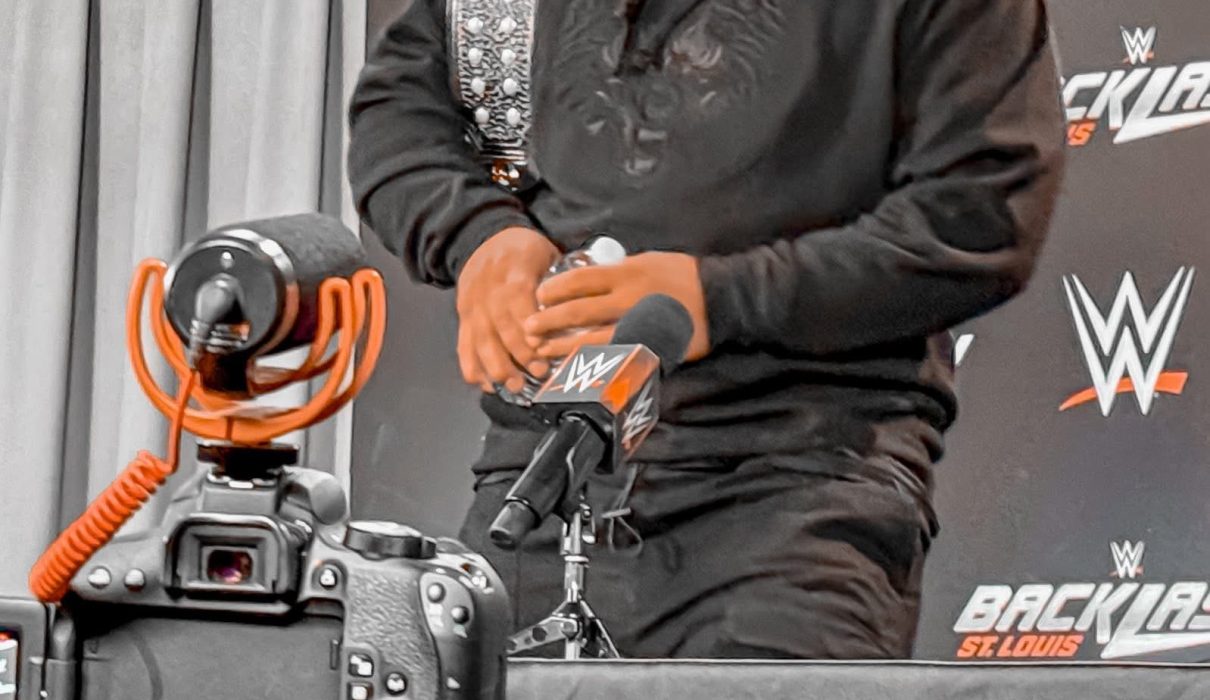
At WWE Backlash on May 10, 2025, at Enterprise Center, Fatu successfully defended the United States Championship in a Fatal 4-Way against Knight, Drew McIntyre and Damian Priest, hitting a moonsault on Knight to retain the title. (WWE)
But spend some time talking with Fatu and another side of the Samoan Werewolf quickly emerges.
Away from the chaos of the ring, Fatu is a father of seven who says taking care of his family is his No. 1 priority. He’s also the type of WWE Superstar who will stop to take a photograph or sign an autograph for a young fan.
For Fatu, remembering where he came from matters.
Because the road that eventually brought him to WWE was anything but easy.
“I had nothing at one time,” Fatu said. “I went from prison to working my way up in wrestling.”
Fatu became a father for the first time at 17. He has spoken openly about becoming involved in gang life as a teenager and being arrested at 18. In a recent appearance on Stephanie McMahon’s What’s Your Story?, Fatu discussed his incarceration and the obstacles his past created even after he was released. (iHeart)
Rather than hide that part of his life, Fatu now hopes his experiences can mean something to someone going through difficult circumstances of their own.
“It will be OK,” Fatu said of the message he would give a struggling young person. “Things always get better, and don’t give up on yourself.”
Family is impossible to separate from the Jacob Fatu story.
He belongs to one of professional wrestling’s most recognizable families, but Fatu said the lessons passed down to him weren’t about fame or championships. They were about humility, accountability, respect and earning what you receive.
His father provided what Fatu considers some of the best advice he’s ever received. His elders taught him to remain humble regardless of his success or last name and to treat people with respect.
The family name might help open a door, but Fatu learned that his work ethic would determine whether that door remained open.
His family also didn’t shield him from his mistakes. During the lowest periods of his life, Fatu learned the importance of accepting responsibility for his actions and moving forward from them.
Those family influences extend deeply into professional wrestling.
Fatu credits the late Yokozuna as an influence and points to his uncle Umaga as another major inspiration. Today, he appreciates having his uncle Haku backstage, where another member of the family can offer advice and perspective.
That guidance isn’t limited to his elders.
“Roman and Solo push me,” Fatu said, referring to Roman Reigns and Solo Sikoa.
Fatu said WWE veterans Randy Orton and Cody Rhodes have also offered advice as he continues establishing himself at the highest level of the industry.
Even during our conversation, Fatu’s love of wrestling surfaced unexpectedly.
He spotted a photograph of Jeff Hardy hanging on the wall behind me and immediately mentioned how much he enjoyed watching Hardy wrestle.
It’s fitting considering Fatu himself has developed a style that challenges what fans expect from a wrestler his size. His explosive moonsaults and aerial offense have become as much a part of the Samoan Werewolf as his power and intensity.
Even Fatu’s intimidating nickname has a much less frightening origin.
“The Samoan Werewolf” can trace its roots, in part, to Twilight. The werewolves from the popular movie franchise helped inspire a nickname that would eventually become synonymous with Fatu’s wrestling career.
Once the bell rings, however, there isn’t much Hollywood fiction required.
Fatu’s intensity appears genuine. The facial expressions, explosive movements and unpredictability have helped create a character who feels like he could lose control at any moment.
Yet the man portraying that character speaks repeatedly about humility, family and helping others.
That contrast may be one of the most interesting things about Fatu.
The Samoan Werewolf may look terrifying walking toward the ring, but Jacob Fatu understands what a photograph, autograph or brief interaction can mean to a kid watching from the crowd.
He was once that wrestling fan himself.
Fatu’s journey nearly took another turn before his WWE career truly got started.
He has spoken publicly about personal struggles that jeopardized his opportunity with the company and credits Paul “Triple H” Levesque with ultimately giving him another chance.
What Fatu did with that opportunity was up to him.
He made his WWE arrival in 2024 and less than a year later found himself standing inside Allegiant Stadium at WrestleMania 41 with LA Knight across the ring and the United States Championship at stake.
Two moonsaults later, Fatu was a champion. WWE records his United States Championship reign as lasting 69 days, from April 19 through June 28, 2025. (WWE)
It was a destination that would have seemed almost unimaginable during some of the darkest periods of his life.
But wrestling has a way of creating relationships along the journey.
Fatu also spoke fondly about working with Royce Keys, someone he said he has known for a long time. Those longstanding relationships are important to a performer whose conversation repeatedly comes back to loyalty and family.
And “family” for Fatu now means much more than wrestling lineage.
It means seven children waiting at home.
The championships matter. WrestleMania matters. Performing in packed arenas around the world matters.
But providing for those seven children is why he does it.
Family, Fatu said, is his No. 1 priority.
“Those seven kids are why I keep doing what I do,” Fatu said. “I want to make sure they have every opportunity.”
Perhaps that’s why his story resonates beyond professional wrestling.
The 18-year-old who found himself arrested couldn’t have known exactly where his life was headed. The teenager who became a father couldn’t have seen WrestleMania waiting somewhere in his future.
Fatu doesn’t erase those chapters of his story. He talks about them.
They are part of the reason he can tell a kid struggling today that things can get better. They explain why the advice from his father still matters, why he values having Haku backstage, why the examples of Umaga and Yokozuna remain with him and why the second chance from Triple H meant so much.
Jacob Fatu’s past didn’t disappear when he walked through WWE’s doors.
He simply refused to let it write the ending.
As Fatu puts it:
“It ain’t how you start, it’s how you finish.”