
 By
By Southern charm meets emotional harm in Opera Theatre of Saint Louis’ A Streetcar Named Desire, the third production of their 51st festival season. Based on Tennessee Williams’ play, which was later made into a film, and directed by artistic director Patricia Racette with music from principal conductor Daniela Candillari, A Streetcar Named Desire is steamy and stormy.
Composed by André Previn, who adapted it for opera, A Streetcar Named Desire is set in 1940s New Orleans. Like its predecessors, it centers on Blanche DuBois, a Southern belle whose luster is fading.
Determined not to abandon her garish life of refinement, she arrives in the city to stay with her sister Stella and her husband Stanley Kowalski.
Having lost Belle Reeve, the family’s estate in Laurel, Mississippi, she is looking for an emotional break. Sadly, she doesn’t find it in New Orleans.
Upon her arrival, she is met with hostility from Stanley, who is no one’s choice for husband of the year. A brutish, boorish drunk, he suspects his sister-in-law is not who she claims to be and delves further into her background.
As the production proceeds, the tension becomes more palpable. Looking for a reprieve from her troubles, Blanche turns to Stanley’s friend Mitch.
A working-class schlub looking for a better life, Mitch is smitten. His connection with Blanche appears to offer a real chance at happiness.
For Blanche, the next chapter of her life is off to a bad start. Resolved to find out what she is hiding, Stanley discovers that she was dismissed from her teaching job following accusations of an inappropriate relationship.
This innuendo, combined with her history of scandalous behavior, heightens emotions as the thermometer rises. The situation turns volatile during one of Stanley’s poker nights when his aggressive behavior leads to serious consequences.
Their dreams are shattered after Stanley divulges Blanche’s checkered past to Mitch, ending any chance the couple has for happiness. With her secret out in the open, Blanche spirals towards mental collapse.
Looking to alleviate the tension, Stella, who also knows of her past, plans a birthday celebration. Unfortunately, her killjoy husband ruins things by presenting Blanche with a bus ticket home.
Stanley’s actions complicate Stella’s loyalties as her sister and husband continue to clash. Her ongoing denial about his actions causes her to drift further away from her sister.
The intensity reaches an apex when Stanley and Blanche are left alone. Their confrontation shatters her world, leading to trauma that descends into delusion. Meanwhile, Stanley enjoys her downward spiral.
As taxing as the Crescent City’s weather, this saucy and southern opera ends with a pregnant and docile Stella refusing to cross her husband. By not standing with her sister, she only makes things worse. Her inaction leads to her complicity in having Blanche committed to a mental institution.
Never performed by the company previously, this emotionally draining adaptation chronicles the decline of Southern aristocracy through the lens of its problematic characters. Nasty and tragic, A Streetcar Named Desire is one of the most challenging works in modern opera.
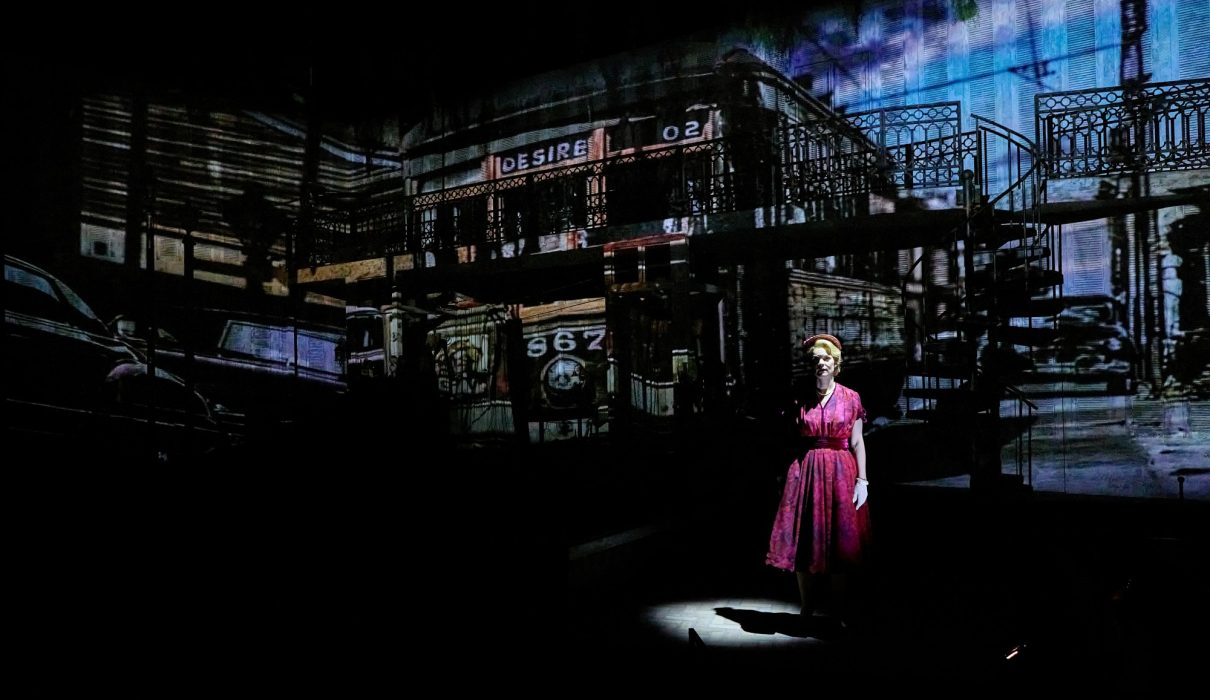
Nonetheless, OTSL rises to the challenge with a potent production that features a sweeping score along with the season’s best set design,
courtesy of Andrew Boyce. It also feels stunning visual projections from Kylee Loera that provide visual context for the setting.
Under Racette’s steady hand, these elements work alongside a marvelous cast whose performances are as hot, humid, and sweltering as the Big Easy.
A late addition to the cast, David Adam Moore is excellent as Stanley. Having played the role previously, he understands the inner rage that fuels the character. Vile and vicious, his powerful performance is blunt and harsh.
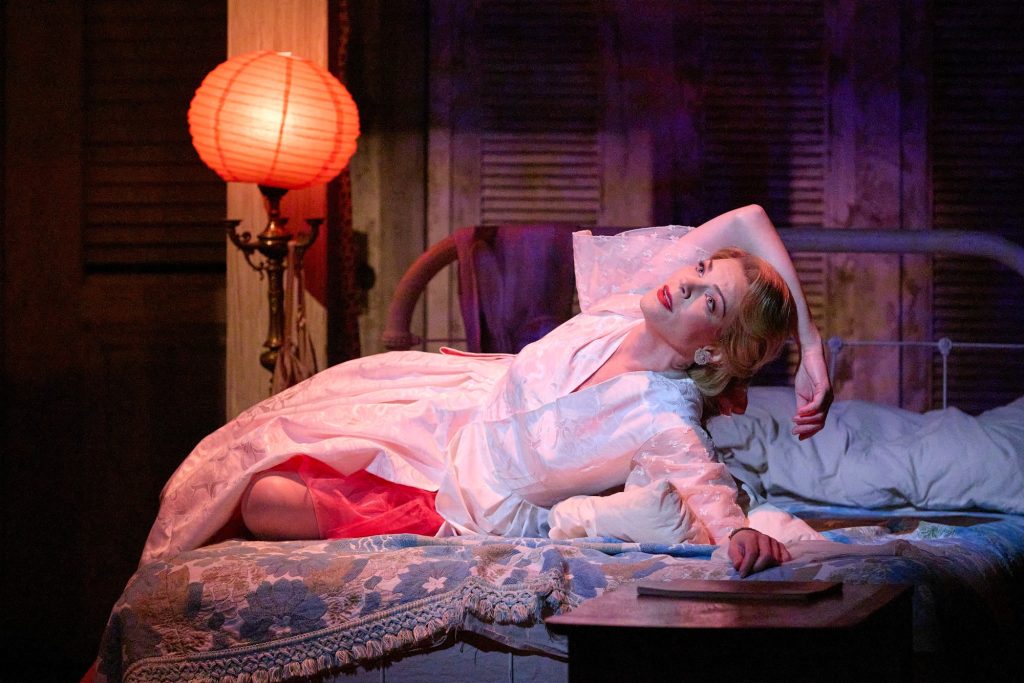
Sara Gartland’s return to Opera Theatre as Blanche is devastatingly poignant. Her portrayal of a fading alcoholic debutante is filled with pathos and emotional gravitas. Heavy on melancholy, she delivers one of the season’s most dynamic performances.
Soprano Lauren Snouffer’s OTSL debut finds her holding her own with talented co-stars. Dramatically, her role as Stella is the glue that holds the production together as she walks an emotional tightrope between her husband and sister.
Filled with southern discomfort A Streetcar Named Desire numbs audiences in all the right ways as it confronts mental health, societal failure, alcoholism, assault, and family dysfunction.
Filled with great singing and great performances, OTSL’s A Streetcar Named Desire is a dramatic triumph filled with booze and bluster. This is must-see melancholia!
A Streetcar Named Desire runs through June 26 at the Loretto-Hilton Center on the campus of Webster University.
Productions at Opera Theatre of St. Louis are in English with musical accompaniment from the St. Louis Symphony Orchestra. For more information on programming for the 2026 season, visit opera-stl.org.
Photos by Eric Woolsey