
 By
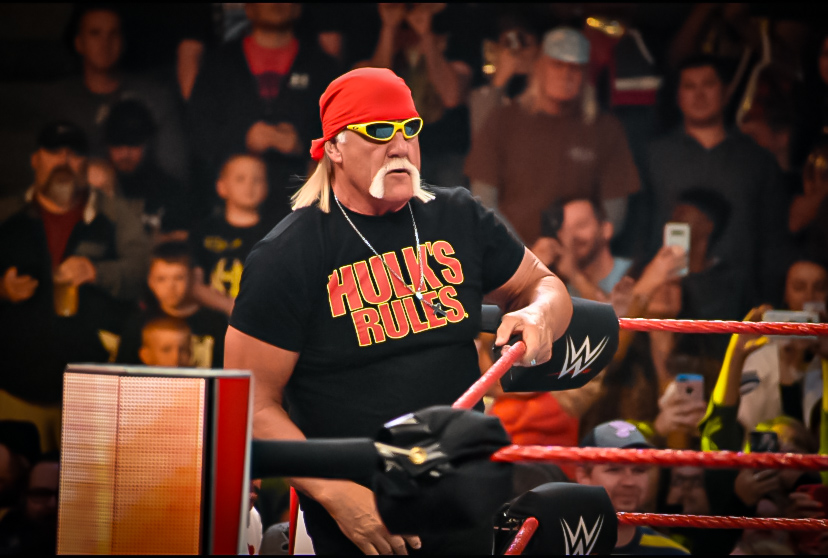
By The world of professional wrestling lost a titan today with the passing of Hulk Hogan, one of the most recognizable and polarizing figures in the history of sports entertainment. To generations of fans, including myself, he was the red-and-yellow-clad superhero who told kids to eat their vitamins, say their prayers, and believe in themselves. To others, including myself, he was a man whose legacy was marred by controversy, legal battles, and contradictions that mirrored the complexities of American celebrity culture itself.
Hogan—born Terry Bollea—was not just a wrestler. He was a movement. His rise in the 1980s coincided with the national explosion of cable television and the birth of the modern WWE (then WWF). With his charisma, unmatched crowd connection, and larger-than-life physique, he helped turn wrestling from a niche curiosity into a global phenomenon. His matches against the likes of André the Giant, Randy Savage, and The Ultimate Warrior are etched into pop culture history.
But Hogan’s impact went far beyond the squared circle. He was the first true crossover wrestling star, landing roles in movies, appearing on talk shows, and headlining Saturday morning cartoons. He was a walking embodiment of Americana—his entrance theme “Real American” becoming a rallying cry for fans young and old. For a time, Hulkamania was a way of life.
Yet, the later chapters of his life proved far more complicated. A well-publicized scandal involving racially insensitive comments, followed by a legal war with Gawker Media, changed the narrative. Hogan became a cautionary tale about fame, privacy, and the evolving standards of public accountability. Though eventually reinstated into the WWE Hall of Fame, the stain on his reputation remained a subject of heated debate. At his final WWE appearance, he was openly booed by thousands. His less than sincere, if you want to even call it that, apologies for his insensitive racial comments did him no favors. His support of President Donald Trump, speaking at the Republican National Convention, did him no favors. Yet, Hogan trudged on, never bowing to his critics.
Still, for all the blemishes, one cannot deny Hogan’s monumental contributions to professional wrestling and pop culture. He laid the foundation for the industry’s boom periods, paved the way for stars like The Rock and John Cena, and brought wrestling to the mainstream consciousness in a way few others ever could.
Hulk Hogan’s passing marks the end of an era. He was a hero to many, a controversial figure to some, and a transformative force in entertainment. As fans mourn, reflect, and debate, one thing is certain—his shadow will loom large over the industry he helped define.
Even in writing this piece, part of me wanted to bust out the “What’cha gonna do” saying that was universally known. Part of me also wanted to chastise a man who was once my hero. Truth is, I had not looked at Hogan the same for quite some time. Maybe that is just part of growing up. I just couldn’t, and that’s ok. In the end, perhaps the most important message we can take from the life of Terry Bollea, aka Hulk Hogan is simply this, unless they’re your parents or someone close to you, heroes are nothing more than figments of our imaginations. It’s ok to want to be able to shoot like Mike, hit a ball like Mantle or throw a pass like Mahomes, but we must never forget that these people are nothing more than Real Americans, and real people with their own everyday problems and flaws, just like Terry Bollea.
Rest in power, Hulkster. The ring will never be the same without you.